And why did I take it, even if I don’t fancy a coding career?
In 2017, during Morten Rand-Hendriksen’s talk at WordCamp Europe, I learned about CSS Grid. I was amazed with what it could do and really wanted to learn more about it. I kept saying this for over a year, without really diving into it.
I also experienced some problems when I tried to adjust some CSS properties in themes I used in WordPress. I got frustrated and didn’t understand why things didn’t change the way I wanted.
I really wanted to brush up my CSS skills but when? It was hard to make or find time to do this. After all, I’m self-employed and really need to make hours I was paid for, instead of learning things.
Christmas 2018, I stumbled upon a tweet that invited me to the 100 Days of Code Challenge. And I accepted.
What is 100 Days of Code?
100 Days of Code was started by a Canadian guy called Alex Kallaway.
The basics are 2 rules:
- Code for one hour a day
- Post your progress to Twitter using the hashtag #100DaysOfCode
How I approached this challenge
I added a 5-step way to deal with this challenge:
1. Set a clear learning goal
You need to know what you want to learn, otherwise, it’s really hard to focus. There’s just too much out there. For me this was CSS Grid to start with.
2. Find a resource or course to learn from
I started with FreeCodeCamp. They have an amazing, free curriculum you can follow and it’s high quality. For my CSS course, I picked one from Udemy called Advanced CSS and SASS.
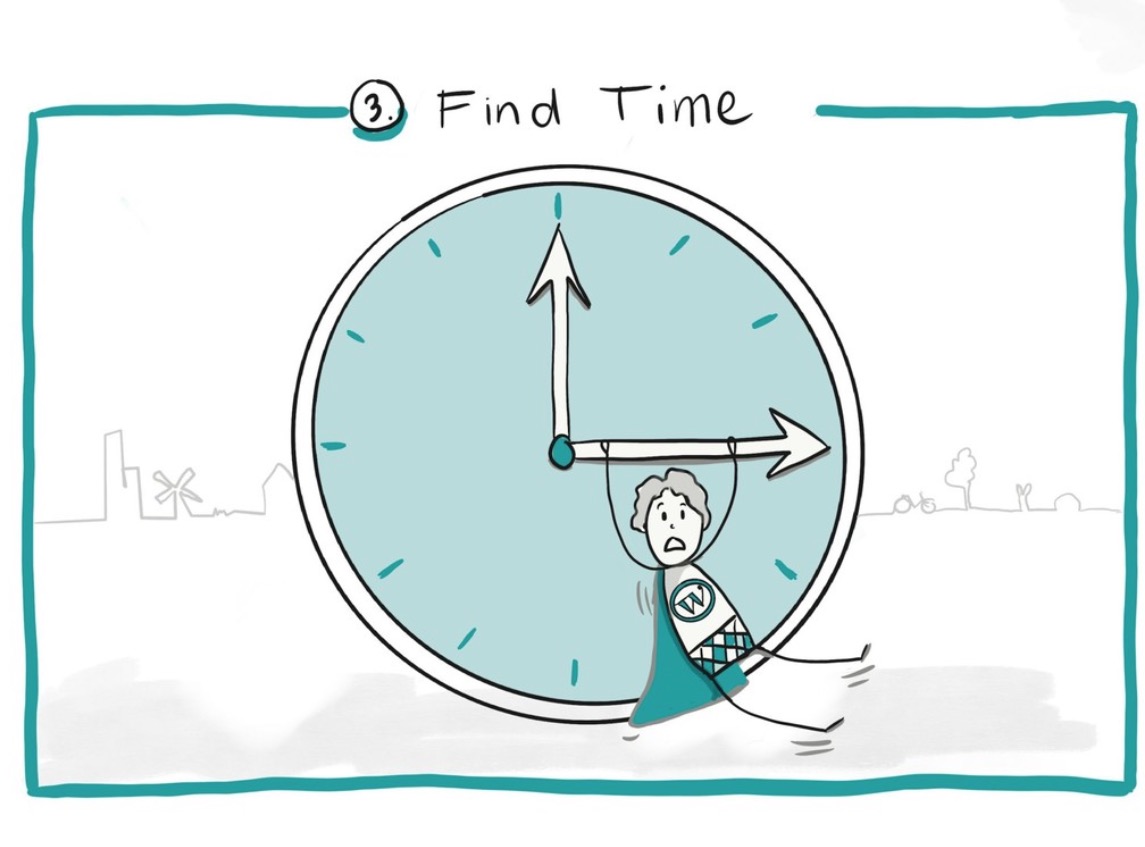
3. Find or make time

This was the hard part. Previous attempts failed because I would start in holidays, then forget about it when client work kicked in.
One hour a day really worked for me. Doing it right at the start of the day, before I opened social media or email, was best. This also resulted in me being more productive for the rest of the day.
I didn’t do the challenge on weekends and sometimes I had weeks where it was impossible to find time. And that’s okay. It’s not a board game where you have to start over at day 1 when you miss a day. Just continue where you stopped.
4. Post progress to Twitter
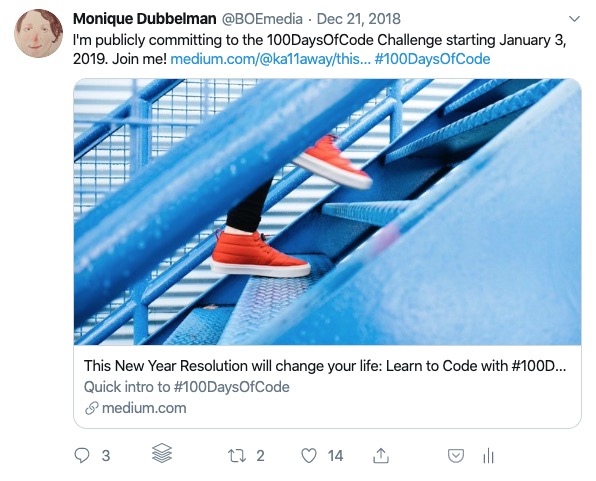
This was the easiest part. Write a small update on what I had been doing that day and post it to Twitter.
5. Have fun
This is key. It’s really hard to learn something you don’t enjoy.
Somewhere in September, a friend asked me if I wanted to start a study group on React/Javascript. When you know me, you know Javascript isn’t my first love. But doing it with a group, I felt empowered and said yes.
But I didn’t like it. I don’t like Javascript. It’s so far off from what I do on a daily basis, it turned out to be a bad choice. Lesson learned: stick to what interests you.